How I stopped feeling guilty about one of my favourite foods and found a way to enjoy every bite without going overboard.
Sushi is one of those foods that has always felt like a celebration to me. The ritual of it — the clean flavours, the precise little pieces, the sharp hit of wasabi — there is nothing quite like it. And for a long time, I ate it without a second thought.
Then I started paying more attention to how I eat. I began cooking fresh every day, choosing whole ingredients, and thinking about what actually nourishes me. Sushi did not disappear from my life — but my relationship with it changed. I learned to love it more deliberately.
The honest truth about sushi and health
Sushi has a reputation for being one of the healthiest cuisines in the world — and in many ways, that reputation is earned. But it is not the whole story.
Raw fish is extraordinarily lean and rich in omega-3 fatty acids, which support heart and brain health. Nori contains iodine, iron, and antioxidants. Ginger aids digestion. Wasabi has antimicrobial properties.
Sushi rice is seasoned with sugar and rice vinegar — it adds up fast. Specialty rolls with tempura, spicy mayo, or cream cheese can be 400–600 calories per roll alone, rivalling fast food.
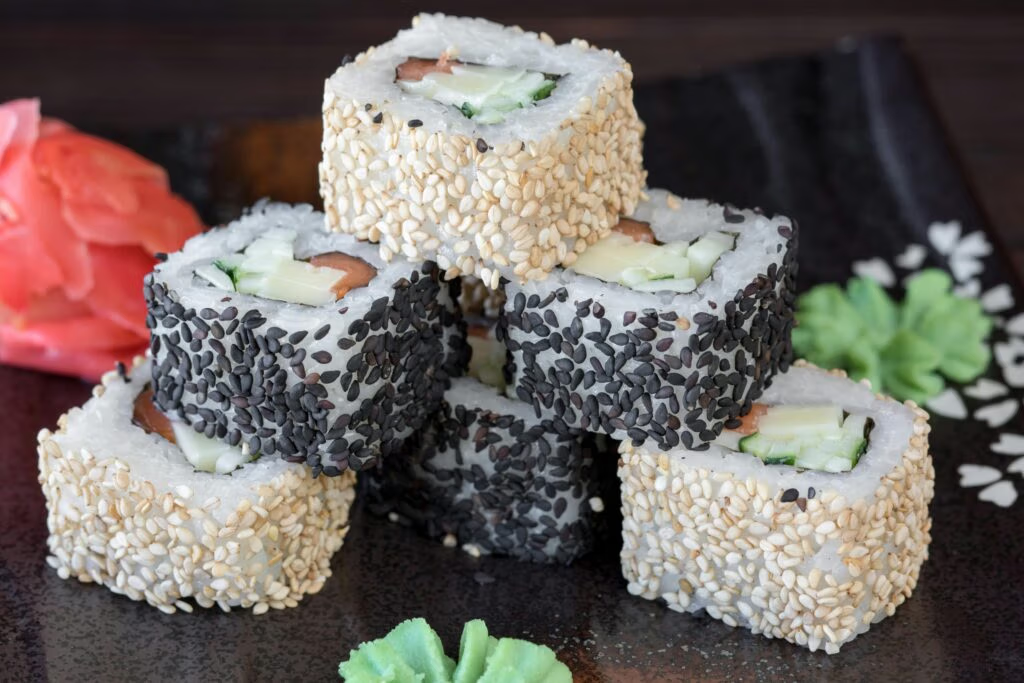
Sushi looks light. Six pieces of a thick roll feels modest on the plate but may contain more rice than a full bowl. The visual size of each piece does not tell you what is inside it.
How I think about ordering now
I did not want to stop eating sushi. I wanted to eat it in a way that felt aligned with how I approach the rest of my food. So I developed a simple personal framework — not rules to stress over, just a way of thinking before I order.
Eat freely
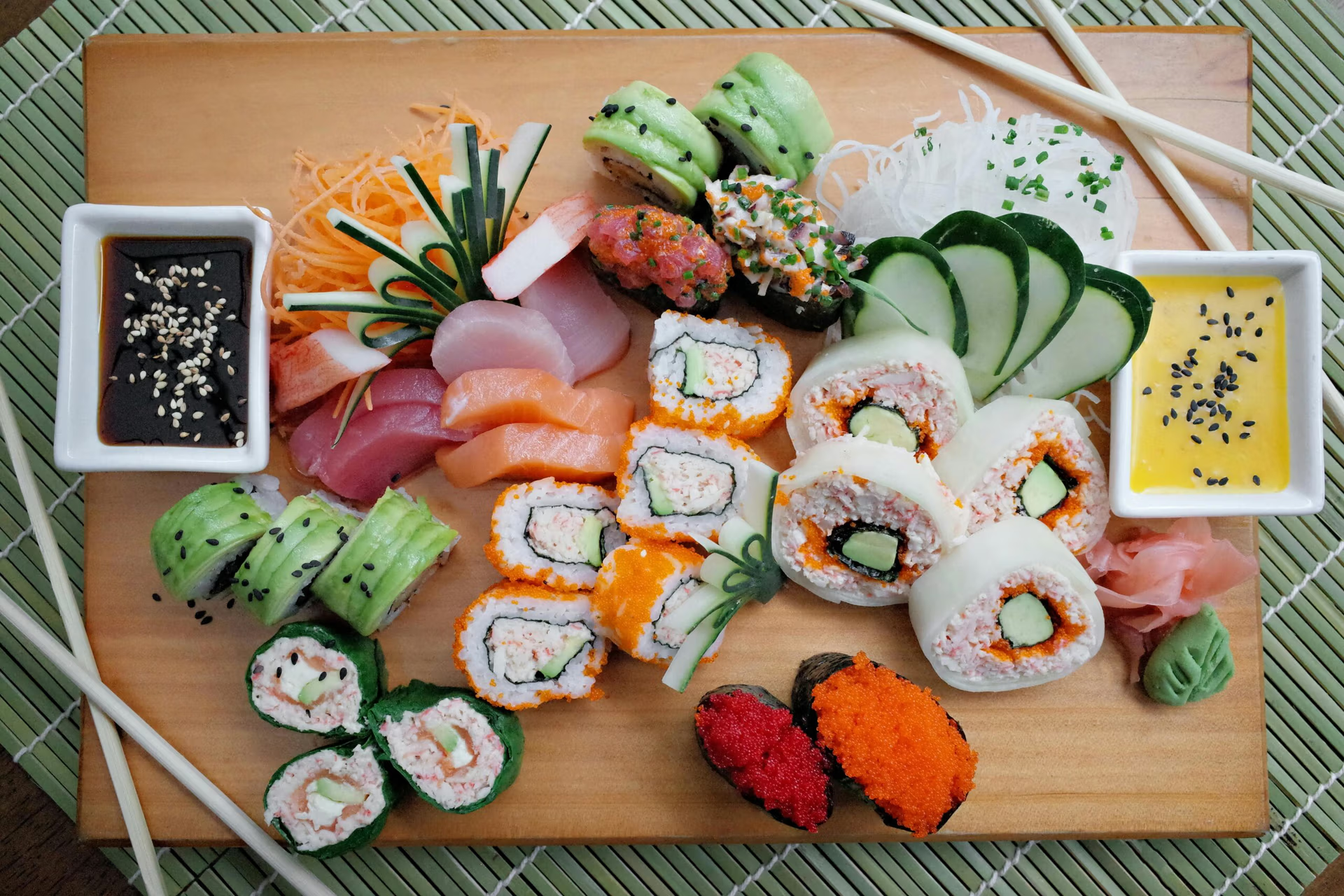
Pure fish, no rice. The most nutrient-dense, lowest-calorie option on the menu. Rich in protein and omega-3s.
Great choice
A small mound of rice topped with fish. Balanced, satisfying, and portion-controlled by nature.
Enjoy mindfully
Cucumber, avocado, or tuna rolls are a reasonable choice. One roll alongside sashimi is a lovely meal.
Occasional treat
Tempura, spicy mayo, cream cheese — delicious but calorie-dense. A treat, not a staple.
 My personal rules at the sushi table
 My personal rules at the sushi table
Why I refuse to make sushi a guilty pleasure
There is a version of healthy eating that turns every indulgence into a moral failure. I rejected that version a long time ago. Sushi is not a cheat meal. It is not something I need to earn or compensate for. It is a food I love, that has real nutritional value when I choose well, and that brings me genuine joy.
The goal was never to eat less of things I love. It was to eat them in a way that feels right — satisfying without excess, pleasurable without guilt. For sushi, that means sashimi-forward meals, simple rolls, and the occasional specialty roll when the moment calls for it.
What a balanced sushi meal looks like for me
On a typical sushi outing, my order looks something like this: a bowl of miso soup to start, a plate of edamame to share, six to eight pieces of sashimi (usually salmon, tuna, and yellowtail), and two to four pieces of nigiri if I am still hungry. Occasionally, one simple maki roll on the side.
That meal is genuinely nourishing — high in protein, rich in healthy fats, moderate in carbohydrates, and deeply satisfying. It feels like a treat because it is a treat. And I never leave the table feeling like I overdid it.
The best relationship I have with food is the one where I never feel deprived, never feel guilty, and always feel good after eating. Sushi fits perfectly into that relationship — not despite my clean eating approach, but because of it. When you choose carefully, eat slowly, and stay honest about what you actually need, sushi is one of the most beautiful, nourishing meals there is.